Mag Wheel Repair and Refurbishment in Cape Town: Your Complete Guide

Collision Coachworks Team
Expert Panel Beaters
Your wheels take a beating on Cape Town's roads. Between the potholes on the N1, kerb strikes in tight Parow parking bays, and the occasional scrape against a raised island, alloy mag wheels are one of the most commonly damaged parts of any vehicle. The good news? Mag wheel repair in Cape Town is far more cost-effective than replacement — and a quality refurbishment job can make your wheels look factory-fresh again.
At Collision Coachworks in Parow Industria, we handle mag wheel damage as part of comprehensive collision repairs, and we're often asked by customers whether a damaged wheel can be saved or whether replacement is the only option. This guide answers that question in detail.
What Is Mag Wheel Repair?
The term "mag wheel" is used loosely in South Africa to describe alloy wheels — lightweight wheels made from aluminium alloy or magnesium alloy. True magnesium wheels are rare on everyday cars; most vehicles on the road, from a VW Polo to a Toyota Hilux, run aluminium alloy wheels that are colloquially called mags.
Mag wheel repair refers to the process of restoring a damaged alloy wheel to its original condition. Depending on the type and severity of damage, this can involve:
- Kerb rash repair: Smoothing and refinishing scuffs and scrapes on the wheel lip or spoke edges
- Crack repair: Welding hairline cracks and restoring structural integrity (for repairable cracks only)
- Straightening: Correcting bends and warps caused by pothole impacts using a hydraulic wheel press
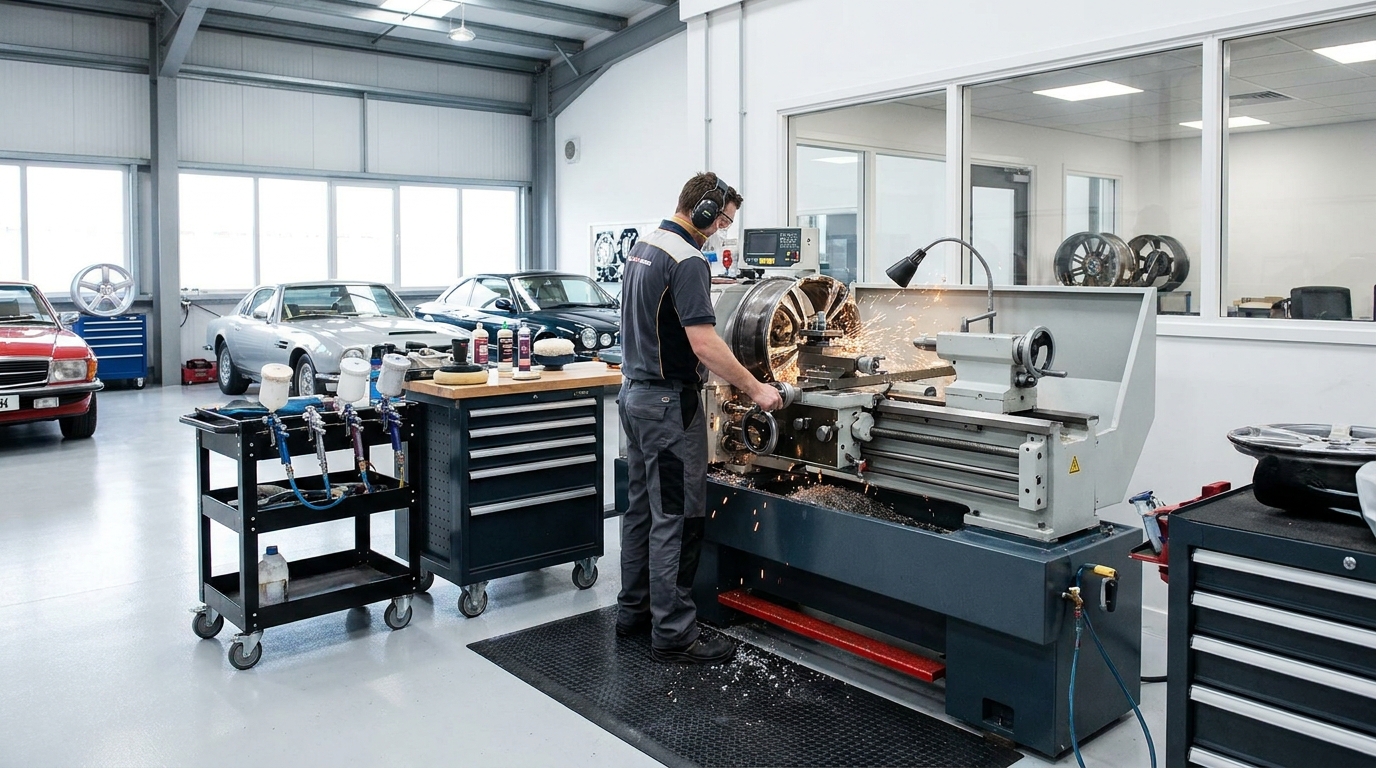
- Diamond cutting: Machining the face of the wheel on a CNC lathe to restore the polished finish
- Powder coating or spray painting: Applying a fresh finish in the original or custom colour
Common Causes of Mag Wheel Damage in Cape Town
Cape Town drivers face a unique set of wheel hazards. While the roads in suburbs like Durbanville, Bellville, and Brackenfell are generally well-maintained, the road network across Parow, Goodwood, and parts of the Northern Suburbs has deteriorated significantly. Add to that the tight parking in shopping centres and the raised kerbing around taxi ranks, and you have a recipe for frequent alloy wheel damage.
Pothole Damage
Potholes are the number one cause of bent and cracked mag wheels in South Africa. When a tyre drops into a pothole at speed, the sudden impact transfers enormous force through the tyre sidewall and directly into the alloy wheel. The result is a bent rim, a cracked spoke, or both. You'll typically notice the damage through vibration at certain speeds, a pulling sensation while driving, or a tyre that keeps losing pressure.
Kerb Strikes and Parking Damage
Kerb rash is the most common form of cosmetic wheel damage. It happens when the outer edge of the wheel scrapes against a pavement, parking bay edge, or raised island. The result is a series of gouges, scratches, and paint loss on the wheel lip — unsightly, but generally not structurally serious. This type of damage is almost always repairable.
Collision Damage
Accident damage to wheels is common in Cape Town's busy traffic. A side swipe, a low-speed collision, or even a tyre blowout at speed can bend a rim badly. In collision scenarios, the wheel is often assessed as part of a broader panel repair — your insurer will typically cover wheel damage alongside bodywork repairs if the damage is collision-related.
Mag Wheel Repair vs Replacement: How to Decide
The key question is always: repair or replace? The answer depends on the type and extent of the damage.
When Repair Is Possible
- Minor to moderate kerb rash on the lip or spokes
- Hairline cracks that don't penetrate the full depth of the wheel
- Mild bends that can be safely straightened without compromising integrity
- Cosmetic damage only — scuffs, paint chips, or oxidation
Repairable wheels can typically be returned to full structural and cosmetic condition by a specialist. A repaired and properly refinished alloy wheel is safe to use and will look as good as new.
When Replacement Is Necessary
- Cracks through the barrel or spoke that compromise structural strength
- Severe bends that cannot be safely straightened
- Impact damage near the valve stem or bead seat area
- Multiple cracks or repairs that have been done before (repeated repairs weaken the metal)
- Damage to a wheel where metal fatigue is evident
A responsible panel beater or wheel repair specialist will always tell you honestly if a wheel is beyond safe repair. A cracked or structurally compromised wheel that fails at highway speed is a serious safety risk — never try to save money by keeping an unsafe wheel in service.
The Mag Wheel Repair Process Explained
Understanding the repair process helps you evaluate the quality of the work and set realistic expectations.
Step 1: Assessment
The wheel is removed from the vehicle and inspected. This involves checking for cracks (sometimes with a dye penetrant test), measuring the runout (how true the wheel spins), and assessing cosmetic damage. A professional will tell you upfront whether repair is viable and what method is appropriate.
Step 2: Straightening (if required)
For bent wheels, a hydraulic wheel straightening press applies controlled force to restore the original profile. This process requires skill — too much pressure or incorrect technique can crack the wheel. Quality shops use specialised equipment and know when to stop.
Step 3: Welding Cracks (if required)
Hairline cracks in alloy wheels can be TIG welded by a specialist. The weld must be ground smooth afterwards and the structural integrity of the repair verified. Not all shops offer crack welding — it requires dedicated aluminium welding equipment and expertise.
Step 4: Machining and Diamond Cutting (if applicable)
Many modern wheels have a diamond-cut finish — a precision-machined face that creates a high-gloss, bare-metal look. Restoring this requires a CNC lathe that can re-machine the wheel face to the original profile. This is one of the more expensive repair options but produces a stunning result on the right wheel style.
Step 5: Surface Preparation
Before refinishing, the wheel is stripped of all paint and primer, sanded, and prepared. Any filler used to smooth kerb damage must be applied carefully — quality shops use minimal filler and focus on proper metalwork.
Step 6: Powder Coating or Spray Painting
The most common refinishing method for standard alloy wheels is powder coating or spray painting. Powder coating is extremely durable and chip-resistant. Spray painting allows for more colour options and is easier to match OEM finishes. A quality finish requires a proper spray booth — the kind used in professional panel shops like Collision Coachworks in Parow Industria.
Step 7: Lacquering and Finishing
A clear lacquer coat protects the finish and adds depth and gloss. The wheel is then inspected, balanced, and remounted on the vehicle.
How Much Does Mag Wheel Repair Cost in Cape Town?
Prices vary depending on the type of repair, the wheel size, and the finish required. As a rough guide in 2026:
- Kerb rash repair and respray (per wheel): R500 – R1,200
- Straightening (per wheel): R600 – R1,500 depending on severity
- Crack welding and repair: R800 – R2,000+
- Diamond cutting and lacquer: R900 – R2,000 per wheel
- Full set refurbishment (4 wheels, spray): R2,500 – R6,000
Compare this to the cost of a new OEM alloy wheel for a BMW 3 Series or Mercedes C-Class — which can easily run R3,000 to R8,000 per wheel — and the value of quality repair becomes obvious.
Insurance and Mag Wheel Repair
Whether your mag wheel repair is covered by insurance depends on the circumstances:
Comprehensive insurance typically covers wheel damage that results from a collision, accident, or a covered event (like hitting a pothole, depending on your policy wording). Check your policy schedule carefully — some policies specifically exclude pothole damage or limit claims for wheel and tyre damage.
Third-party only cover does not cover damage to your own vehicle, including wheels.
If your wheel damage occurred in an accident, report it to your insurer and ensure the wheels are included in the damage assessment. At Collision Coachworks, we assist customers with the assessment process and can ensure wheel damage is properly documented for insurance purposes.
Tips for Protecting Your Alloy Wheels
Prevention is always cheaper than repair. These habits will extend the life of your alloy wheels on Cape Town's challenging roads:
- Increase tyre sidewall height on vehicles you primarily use for commuting — lower-profile tyres offer less pothole protection
- Slow down for potholes — even a small reduction in speed significantly reduces impact force
- Park carefully in tight bays — take the extra seconds to check your clearance
- Inspect wheels regularly for early signs of kerb rash, cracks, or bends
- Consider wheel rim protectors — rubber lip guards that absorb minor kerb strikes
- Apply a ceramic coating or wheel sealant to make cleaning easier and resist brake dust buildup
Why Choose a Panel Shop for Mag Wheel Repair?
Dedicated wheel repair shops exist in Cape Town, but there's a strong argument for having your wheels repaired at your panel beater — especially if the wheels were damaged in a collision that also caused body damage.
At Collision Coachworks in Parow Industria, we handle both the bodywork and the wheel repair in one place, which means a single assessment, a single quote, and a single handover date. Our spray booth ensures that wheel refinishing is done in a controlled environment, delivering a finish that matches your vehicle's original paintwork where needed. We work with several of South Africa's major insurers and can handle the claims process on your behalf.
Customers from Goodwood, Parow, Bellville, Brackenfell, Durbanville, and across the Northern Suburbs bring their vehicles to us because they trust the quality of our work — and because we stand behind every repair we do.
Ready to Get Your Wheels Repaired?
If your alloy wheels have taken damage — from kerb rash, pothole strikes, or a collision — don't wait. Damaged wheels can affect tyre wear, handling, and safety. A prompt repair is almost always more affordable than you expect, and the result can transform how your vehicle looks and drives.
Contact Collision Coachworks at 9 Assegaai Road, Parow Industria, Cape Town for a no-obligation assessment. We'll inspect your wheels, give you an honest recommendation, and provide a competitive quote. Call us or visit us Monday to Friday — we're here to help you get back on the road with confidence.
Share Article
Need Expert Advice?
Get personalized consultation from our master technicians.
Related Articles
Electric Vehicle Body Repair: New Challenges for Panel Beaters (2026 Update)
Electric vehicle body repair panel beating brings high-voltage safety, aluminium structures, and specialised adhesives that traditional workshops must master. Here is what Cape Town EV owners should know in 2026.
How Long Does Panel Beating Take? Repair Timeline Guide
Find out how long panel beating takes in Cape Town, from minor dents to major collision repair, with realistic timelines, process stages, and local factors that affect turnaround.
Third-Party vs Comprehensive Insurance for Panel Beating: A Cape Town Driver's 2026 Guide
Third-party or comprehensive cover? We break down exactly what each policy pays for when your car needs panel beating, using real Cape Town repair scenarios and 2026 ZAR figures.