Paintless Dent Removal vs Traditional Panel Beating: Which Is Right for You?

Collision Coachworks Team
Expert Panel Beaters
When your car picks up a dent — whether from a runaway shopping trolley in the Shoprite car park, a minor parking tap, or hail during a Cape Town storm — you face a choice: paintless dent removal (PDR) or traditional panel beating. Both methods can restore your vehicle to factory condition, but they work very differently, suit different types of damage, and come with very different price tags. Understanding paintless dent removal vs panel beating will help you make a smarter, more cost-effective decision.
What Is Paintless Dent Removal (PDR)?
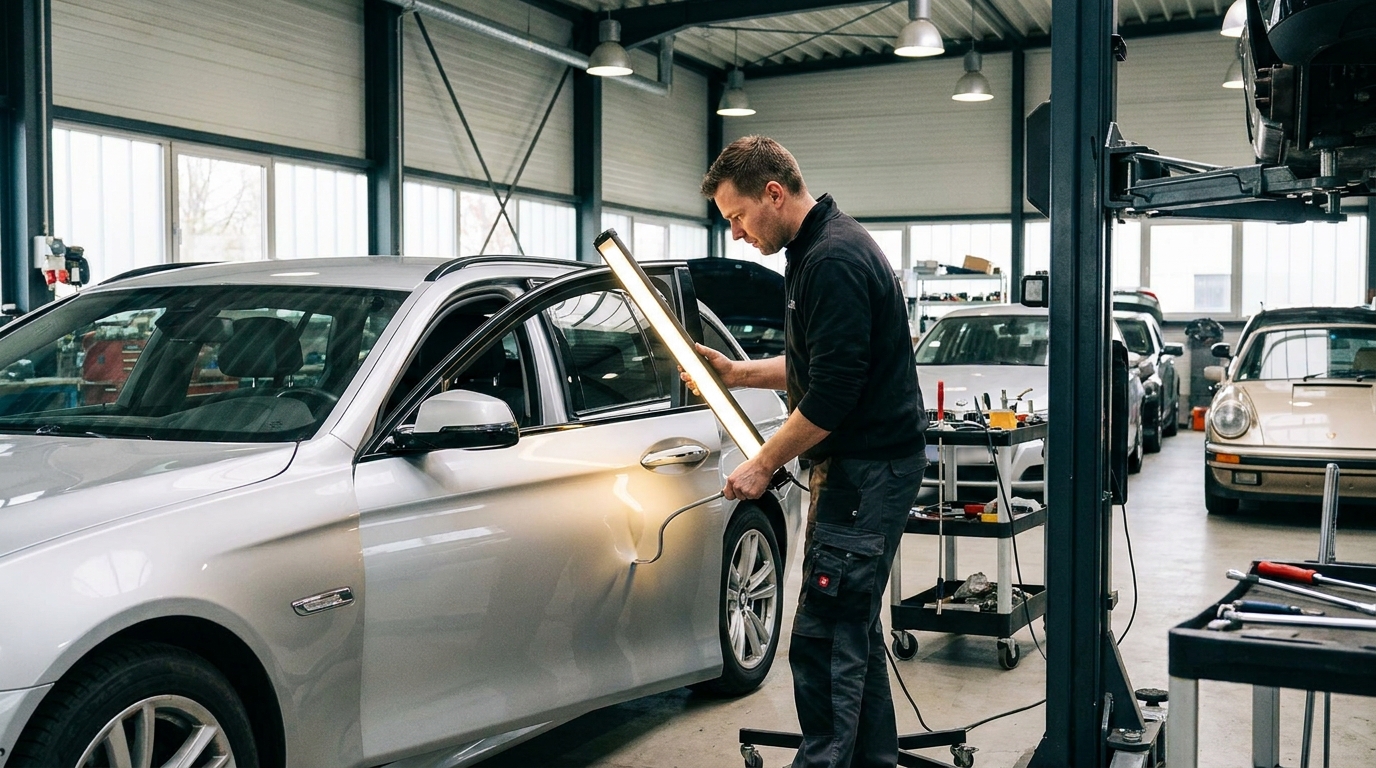
Paintless dent removal is a modern technique that pushes, massages, or pulls a dent back into its original shape — all without touching the vehicle's paintwork. Specialist technicians use a combination of precision metal rods, body picks, and specialised LED lighting panels to work from behind the affected panel, gradually coaxing the metal back to its factory contour.
Because no filler, primer, or paint is involved, PDR is fast, clean, and significantly cheaper than conventional repairs. It also preserves your original factory paint, which matters for resale value and warranty considerations.
When PDR Works Best
- Round, shallow dents — classic hail damage, door dings, and parking dents respond extremely well to PDR.
- Undamaged paint — the paint surface must be intact with no cracking, chipping, or deep scratching.
- Accessible panel areas — the technician needs to reach behind the panel. Some pillars, door edges, and seams limit access.
- Ductile metal panels — steel panels flex back well; some aluminium panels are also suitable with specialist tools.
- Hail damage clusters — PDR is the preferred industry approach for hail repair in South Africa, often covered directly by insurance.
What Is Traditional Panel Beating?
Traditional panel beating has been the cornerstone of collision repair for over a century. A skilled panel beater uses hammers, dollies, slap hammers, and body picks to reshape damaged metal from the outside. Where the metal is too stretched or torn, sections may be cut out and replaced with new steel. Once the panel is straight, the surface is skimmed with body filler, blocked smooth, primed, and then colour-matched before being sprayed in a professional spray booth.
At Collision Coachworks in Parow Industria, our panel beaters use modern frame and chassis straightening equipment alongside hand skills built up over years of practical experience — the combination of technology and craftsmanship that separates a premium repair from a quick fix.
When Traditional Panel Beating Is Necessary
- Creased or sharp dents — metal that has folded along a sharp crease cannot be reliably worked back by PDR alone.
- Paint damage — if the paint is cracked, chipped, or scratched, the panel needs filler and a respray regardless.
- Collision damage — significant impacts often deform panels beyond what PDR can address.
- Structural damage — any damage affecting the chassis, sills, A-pillars, B-pillars, or crumple zones requires proper structural repair and measurement.
- Heavily stretched metal — metal that has thinned or torn needs replacement or extensive metalwork.
Cost Comparison: PDR vs Panel Beating in Cape Town
Cost is usually the deciding factor for Cape Town drivers. Here is a realistic overview based on current market rates in the Western Cape:
Paintless Dent Removal Costs
- Single small dent (door ding): R350 – R800
- Medium dent (panel centre): R800 – R1 800
- Hail damage (light to moderate): R2 000 – R8 000 depending on the number of impacts and panel count
- Severe hail (full vehicle): R8 000 – R25 000+
Traditional Panel Beating Costs
- Minor dent with respray (single panel): R2 500 – R5 000
- Moderate damage requiring filler and blend: R5 000 – R12 000
- Significant collision repair (multiple panels): R12 000 – R60 000+
- Structural repairs: Quoted individually based on measurement and parts
These are broad ranges — every vehicle and every repair is different. Common cars we work on in the Cape Town Northern Suburbs like the VW Polo, Toyota Hilux, Ford Ranger, and BMW 3 Series all have different panel complexities that affect pricing. Always get a written quote before authorising work.
How Does Each Method Affect Your Car's Value?
This is an often-overlooked consideration. PDR, when done correctly, preserves your factory paint completely. For vehicles still under manufacturer warranty, this is important — some warranties specify that unauthorised paint repairs may void coverage. Original factory paint also tends to hold its sheen longer than a respray, and it can be a selling point when the time comes to trade in or sell privately.
Traditional panel beating, done to a high standard, is indistinguishable from the original. The key phrase there is high standard. A professional colour match, quality primers, and a climate-controlled spray booth produce results that hold their value. A poor respray — thin coverage, mismatched colour, or orange-peel texture — can devalue a vehicle noticeably.
At Collision Coachworks, every spray job is performed in our dedicated booth using a computerised colour-matching system. We service clients from across the Northern Suburbs — Bellville, Goodwood, Brackenfell, Durbanville, and beyond — who depend on quality they can trust when they sell or trade their vehicle.
Which Method Does Insurance Prefer?
South African insurers — Discovery Insure, King Price, Outsurance, Santam, and others — generally prefer the most cost-effective repair that restores the vehicle to its pre-loss condition. For hail damage, this almost always means PDR where the paint is intact. Your insurer may direct you to a preferred panel beater or allow you to choose your own (subject to approval). Always confirm your rights under your policy.
If you are paying out of pocket — perhaps because the damage is below your excess, or you were involved in a minor incident you do not want to claim — PDR can save you thousands of rand compared to a traditional repair, especially for hail or parking dents.
The PDR Process: What to Expect at the Workshop
A PDR assessment typically takes 15 to 30 minutes. The technician examines each dent under specialised lighting, checking paint integrity and access points. You will receive a quote that covers each dent individually or as a combined package for hail damage.
The repair itself can take anywhere from one hour for a single ding to two or three days for extensive hail damage across multiple panels. Unlike traditional panel beating, there is no drying time for paint or filler — your vehicle is ready to collect sooner.
The Traditional Panel Beating Process: What to Expect
A traditional repair begins with a full damage assessment, including photography for insurance documentation. The panel beater will disassemble surrounding trim and components to access the damaged area. Metalwork takes place first — straightening, shrinking, or replacing damaged sections. Once the metal is straight, filler is applied in thin coats, block-sanded progressively to a smooth surface, and then primed.
The vehicle then enters the paint shop for colour matching and spraying. After the topcoat and clear coat are applied, the panel goes through a bake cycle in the spray booth for a hardened, durable finish. Reassembly, quality checking, and a final detail complete the job. Depending on the extent of damage, this process can take two days to two weeks.
Can PDR and Panel Beating Be Combined?
Yes — and this is actually common for complex repairs. A hail-damaged vehicle might have dozens of small dents repaired by PDR, while a single panel with a sharp crease or paint chip is repaired traditionally. This hybrid approach gives you the cost benefits of PDR where possible, and the quality of a proper respray where necessary. At Collision Coachworks, we assess each panel individually and recommend the most appropriate technique for every area of damage.
Choosing the Right Panel Beater for Either Method
Whether you go PDR or traditional, the most important factor is the skill and integrity of the workshop doing the work. Look for:
- Transparency: A detailed written quote before any work begins, not a vague verbal estimate.
- Experience: Ask how long they have been operating and whether they have handled your specific make and model before.
- Equipment: PDR requires specialist lighting systems and calibrated tools. Panel beating requires a proper spray booth, frame straightening equipment, and computerised colour matching.
- Warranty: Reputable workshops stand behind their work. Ask about their repair warranty.
- Insurance relationships: An established workshop will have experience dealing with all major South African insurers and know the claims process inside out.
Get an Expert Assessment at Collision Coachworks
Still unsure whether your dent is a PDR job or needs traditional panel beating? Bring your vehicle to Collision Coachworks at 9 Assegaai Road, Parow Industria. Our experienced team will assess the damage honestly and recommend the most cost-effective repair path. We serve drivers from across Cape Town and the Northern Suburbs — from Parow and Goodwood through to Durbanville and Brackenfell — and our reputation is built on doing the right repair, not the most expensive one.
Contact us today to book your assessment. Whether it is a single parking ding, a hail-battered bonnet, or significant collision damage, we have the skills, equipment, and commitment to get your vehicle looking its best.
Share Article
Need Expert Advice?
Get personalized consultation from our master technicians.
Related Articles
Electric Vehicle Body Repair: New Challenges for Panel Beaters (2026 Update)
Electric vehicle body repair panel beating brings high-voltage safety, aluminium structures, and specialised adhesives that traditional workshops must master. Here is what Cape Town EV owners should know in 2026.
How Long Does Panel Beating Take? Repair Timeline Guide
Find out how long panel beating takes in Cape Town, from minor dents to major collision repair, with realistic timelines, process stages, and local factors that affect turnaround.
Third-Party vs Comprehensive Insurance for Panel Beating: A Cape Town Driver's 2026 Guide
Third-party or comprehensive cover? We break down exactly what each policy pays for when your car needs panel beating, using real Cape Town repair scenarios and 2026 ZAR figures.