Paintwork Aftercare: How to Wash, Wax and Protect Your Respray in Cape Town

Collision Coachworks Team
Expert Panel Beaters
You have just collected your car with a flawless new finish, the panels gleam and the colour is deep and even. But here is what many drivers do not realise: how you maintain paintwork after respray in the first weeks and months decides whether that showroom shine lasts five years or five months. Cape Town is especially unkind to fresh paint. Between the fierce summer sun over the Northern Suburbs, the salt-laden air blowing off Table Bay, and the dust and grit thrown up by our roadworks and potholes, a new respray faces a tough environment from day one.
At Collision Coachworks in Parow Industria, we respray dozens of vehicles every month, from daily-driver VW Polos to prized Toyota Hilux bakkies and executive BMWs. The finish we deliver is only half the story. The other half is aftercare, and it is entirely in your hands. This guide walks you through exactly what to do, and what to avoid, so your investment keeps looking its best.
Why Fresh Paint Needs Special Care
Modern automotive paint is applied in layers: primer, base colour coat, and a clear protective topcoat. When we spray your car in our climate-controlled booth, those layers flash off and feel dry to the touch within hours. But the paint is not fully cured. Curing is the chemical process where the solvents fully evaporate and the clear coat hardens to its final strength, and that takes considerably longer than drying.
Depending on the paint system and workshop conditions, a modern two-pack finish can take 30 to 90 days to cure completely. During this window the surface is soft and porous. It can still absorb contaminants, mark easily, and react badly to harsh chemicals or trapped moisture. Treating a three-day-old respray like a factory finish is the single most common way drivers ruin good paintwork.
The First 30 Days: The Rules That Matter Most
During the initial curing period, follow these guidelines carefully:
- Do not wax or seal the paint. The curing clear coat needs to breathe and release solvents. Sealing it too early traps those gases and can cause hazing, dullness or blistering.
- Wash by hand only, and gently. Skip the automatic car washes and their harsh brushes entirely for at least the first month.
- Avoid parking under trees. Bird droppings, tree sap and pollen are acidic and will etch into soft paint far faster than into a cured finish.
- Keep it out of the harsh midday sun where possible. Rapid heating and cooling stresses fresh paint. A carport or garage in Bellville or Durbanville is ideal.
- Do not use a cover on the wet or freshly cured surface. A cover can trap heat and moisture and leave imprints.
If a bird dropping or splash of tree sap lands on the car during this period, remove it immediately with plenty of clean water and a soft cloth. Do not let it bake in the Cape sun.
How to Wash a Fresh Respray Correctly
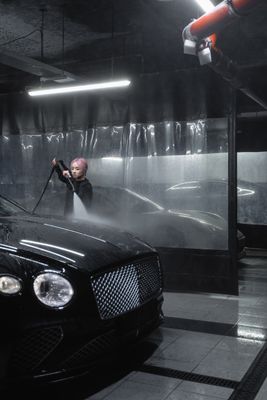
Washing sounds simple, but poor technique is responsible for most swirl marks and fine scratches you see on otherwise well-kept cars. Here is the method our team recommends to every customer who wants to maintain paintwork after respray:
- Wash in the shade, on a cool panel. Never wash in direct sunlight. Water and soap dry too quickly and leave mineral spots, and Cape Town tap water is hard enough to leave marks.
- Rinse thoroughly first. Blast off loose grit and dust before you touch the paint. A single grain of sand dragged across the surface acts like sandpaper.
- Use two buckets. One with your car-shampoo solution, one with clean rinse water. Rinse your mitt in the clean bucket between panels so you are not grinding dirt back into the paint.
- Use a proper pH-neutral car shampoo. Never use dishwashing liquid or household detergent. These strip protection and dry out the finish.
- Use a soft microfibre wash mitt, not a sponge or brush, and work from the roof down.
- Dry with a clean microfibre drying towel or a silicone blade, patting rather than dragging. Never let the car air-dry, as it leaves water spots.
A gentle hand wash every one to two weeks is far kinder to your paint than an occasional aggressive scrub. Consistency beats intensity.
When and How to Wax or Seal
Once your paint has fully cured, usually after about six to eight weeks, you can and should protect it. Waxing or sealing adds a sacrificial barrier that takes the hit from UV rays, contaminants and light abrasion instead of your clear coat.
You have three main options:
- Carnauba wax: Gives a warm, deep shine and is easy to apply, but only lasts around six to eight weeks. Great for enthusiasts who enjoy the process.
- Synthetic paint sealant: Lasts four to six months and offers stronger UV and chemical resistance, which matters a great deal under the Cape sun.
- Ceramic coating: A professional-grade option that bonds to the clear coat and lasts two to five years. It is the most durable protection available and well worth considering for a car you have just invested in respraying.
Whichever you choose, apply it to clean, dry paint in the shade, work one panel at a time, and buff off the residue with a fresh microfibre cloth. Two thin coats always outperform one thick one.
Protecting Paintwork from Cape Town's Specific Threats
Our region puts unique demands on car paint. Understanding them helps you protect against them:
The sun. Cape Town receives intense UV radiation, and ultraviolet light is the number one long-term enemy of automotive paint. It fades colour, especially reds and dark blues, and degrades the clear coat over time. Regular sealing and shaded parking are your best defence. A quality sealant or ceramic coating with UV inhibitors makes a measurable difference.
Coastal salt air. If you live or commute near the coast, from Blouberg to Milnerton, salt in the air accelerates corrosion and dulls paint. Rinse your car more frequently to wash salt residue off the surface before it settles.
Road grime and stone chips. Our roadworks, gravel shoulders and pothole-riddled routes fling stones at your bumper and bonnet. A clear paint protection film on high-impact areas is worth considering, particularly on a fresh respray you want to keep pristine.
Dust and pollen. The dry summer months coat everything in a fine grit. Never wipe a dusty car with a dry cloth to freshen it up, as this is a guaranteed way to scratch the finish. Rinse first, always.
Common Mistakes That Ruin a Good Respray
We see these errors regularly, and every one of them is avoidable:
- Automatic car washes too soon. The spinning brushes are abrasive and their harsh detergents attack uncured paint.
- Waxing in the first month. As covered above, this traps solvents and causes hazing.
- Using the wrong cleaning products. Household cleaners, solvents and petrol-based degreasers have no place near your paint.
- Pressure washing too close. Holding a high-pressure lance right against a fresh edge or seam can lift soft paint. Keep a sensible distance.
- Ignoring bird droppings and sap. Left in the sun on soft paint, these etch permanent marks within hours.
A Simple Long-Term Care Routine
Once your respray is cured and protected, keeping it looking new is straightforward. A realistic routine for a Cape Town driver looks like this:
- Weekly: A quick rinse to remove dust, grit and any salt or bird mess.
- Fortnightly: A proper two-bucket hand wash and microfibre dry.
- Every four to six months: Reapply your sealant, or top up your wax more often if that is your protection of choice.
- Annually: A professional inspection and, if needed, a light machine polish to remove any accumulated fine marks and restore depth.
Follow that and your paint will look years younger than its age, and hold far more value if you ever sell.
Trust the Team That Sprayed It
Nobody understands the exact paint system on your car better than the workshop that applied it. When you respray with Collision Coachworks, we tell you precisely how long your finish needs to cure and exactly how to care for it in the weeks that follow. We are happy to advise on the right products and protection for your vehicle and your driving conditions, whether you are in Parow, Goodwood, Brackenfell or anywhere across the Northern Suburbs.
Knowing how to maintain paintwork after respray is the difference between a finish that turns heads for years and one that dulls within a season. The effort is modest, the payoff is lasting, and the rules are simple once you know them.
If you are planning a respray, or have just had one done and want expert advice on aftercare, contact Collision Coachworks at 9 Assegaai Road, Parow Industria. Our team is ready to help you protect your investment and keep your car looking its absolute best on Cape Town roads. Get in touch today for a free consultation or quote.
Share Article
Need Expert Advice?
Get personalized consultation from our master technicians.
Related Articles
Electric Vehicle Body Repair: New Challenges for Panel Beaters (2026 Update)
Electric vehicle body repair panel beating brings high-voltage safety, aluminium structures, and specialised adhesives that traditional workshops must master. Here is what Cape Town EV owners should know in 2026.
How Long Does Panel Beating Take? Repair Timeline Guide
Find out how long panel beating takes in Cape Town, from minor dents to major collision repair, with realistic timelines, process stages, and local factors that affect turnaround.
Third-Party vs Comprehensive Insurance for Panel Beating: A Cape Town Driver's 2026 Guide
Third-party or comprehensive cover? We break down exactly what each policy pays for when your car needs panel beating, using real Cape Town repair scenarios and 2026 ZAR figures.