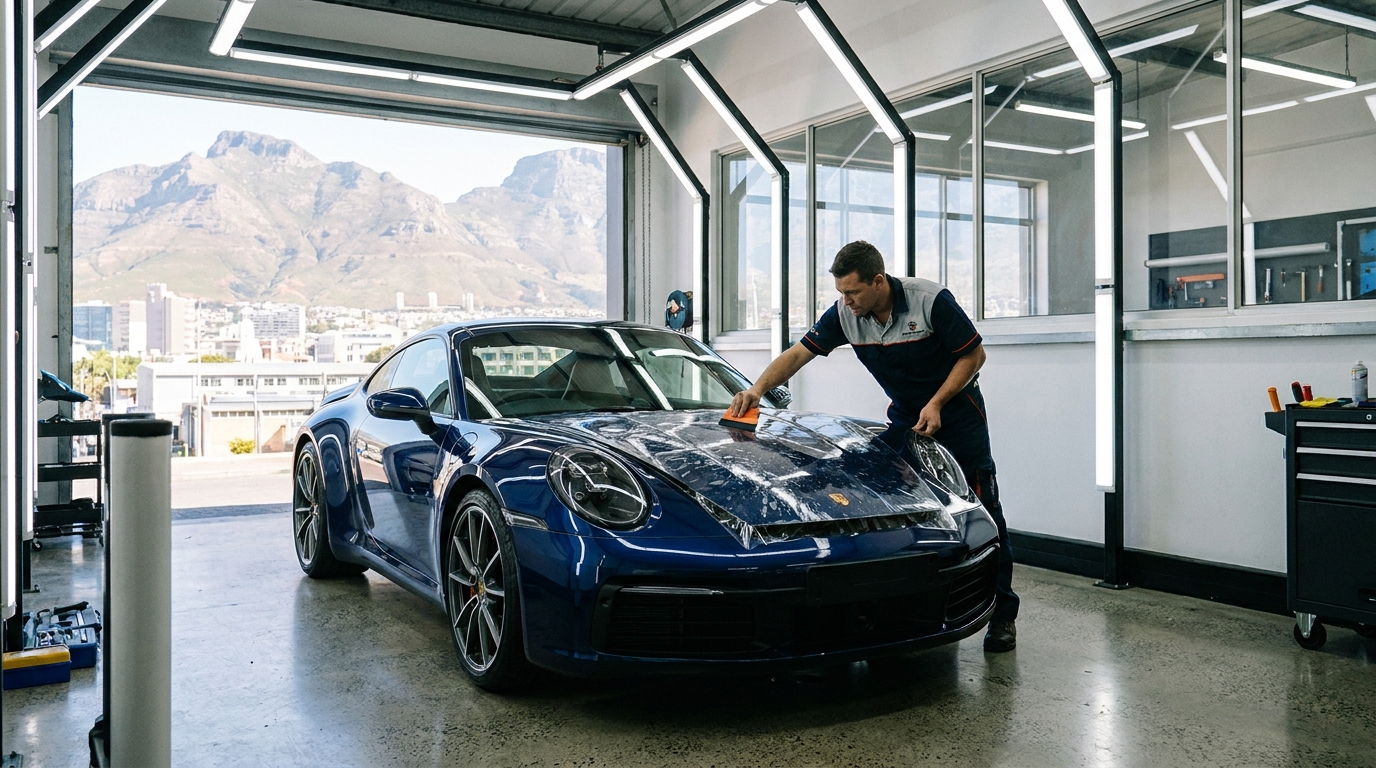
Paint Protection Film in Cape Town: Is PPF Worth the Investment?

Collision Coachworks Team
Expert Panel Beaters
After investing in a professional respray or collision repair, the last thing you want is for stone chips, road debris, or UV rays to undo all that work within months. That's where paint protection film in Cape Town — commonly known as PPF — comes in. This transparent polyurethane film is applied directly over your vehicle's painted surfaces, acting as an invisible shield against the everyday hazards that cause paint damage.
In this guide, we cover everything Cape Town drivers need to know about PPF: what it does, how much it costs, how it compares to alternatives like ceramic coating, and whether it's the right investment for your vehicle.
What Is Paint Protection Film (PPF)?
Paint protection film is a thermoplastic urethane (TPU) film — typically 150 to 250 microns thick — that is applied to the exterior painted surfaces of a vehicle. It was originally developed for military helicopter rotor blades and later adopted by the automotive industry in the 1990s. Today's PPF products are significantly more advanced, offering self-healing properties, optical clarity, and long-term durability.
PPF is designed to absorb impact and prevent damage from:
- Stone chips and gravel — especially common on Cape Town's N1, N2, and R300 highways where road debris is frequent
- Scratches from car washes and brushes
- Bird droppings and insect acids that etch into paint if left untreated
- UV radiation — Cape Town's intense sun can cause paint fading and oxidation over time
- Minor abrasions from everyday parking and driving
- Swirl marks from improper washing technique
Premium PPF products like XPEL, SunTek, and 3M have a self-healing top coat — minor surface scratches disappear on their own when the film is exposed to heat (sunlight or warm water), making the surface look permanently new.
How Is PPF Applied?
Proper PPF installation is a skilled, time-intensive process. The vehicle's paint must first be thoroughly decontaminated, clayed, and polished to remove any existing scratches, swirl marks, or contamination. Applying film over damaged or contaminated paint locks in those defects permanently.
The film is then cut — either by hand or, more commonly, using a computer-plotted cutting program — to match the exact panels of your specific vehicle. Each piece is carefully positioned, smoothed with a squeegee to eliminate air bubbles and lift edges, and heat-formed around curved surfaces and edges.
A full vehicle wrap typically takes one to three days depending on the vehicle size and the complexity of the coverage. The film then needs to cure for 24 to 48 hours before the vehicle is driven or washed.
PPF Coverage Options and Costs in Cape Town
PPF can be applied to the entire vehicle or just the highest-risk areas. Most Cape Town vehicle owners opt for partial coverage to balance protection and budget. Here's a general breakdown of typical coverage packages and approximate costs:
Partial Front Coverage
Covers the bonnet (full or partial), front bumper, headlights, and front quarter panels — the areas most exposed to stone chips and road debris. This is the most popular entry-level option for Cape Town drivers. Cost estimate: R6,000 to R12,000, depending on vehicle size and film brand.
Full Front End
Adds the side mirrors, A-pillars, and full door edges to partial front coverage. Ideal for frequent highway drivers who want comprehensive front-end protection. Cost estimate: R12,000 to R20,000.
Full Vehicle Wrap
Complete protection for all painted surfaces — bonnet, roof, doors, rear quarter panels, boot lid, and all bumpers. This is the premium option, typically chosen for high-value vehicles like BMWs, Mercedes-Benz, Audi, and luxury SUVs. Cost estimate: R25,000 to R60,000+, depending on vehicle size, film grade, and installation complexity.
Pricing varies between installers and depends heavily on the film brand and grade. Budget films may cost less upfront but can yellow or peel within two to three years. Premium films from reputable brands carry warranties of up to 10 years and maintain optical clarity throughout.
PPF vs Ceramic Coating: Which Should You Choose?
A common question Cape Town vehicle owners ask is whether to choose PPF or ceramic coating — or both. They're complementary products that serve different purposes:
- PPF provides physical protection — it absorbs impacts, prevents chips and scratches, and can self-heal minor surface damage. Ceramic coating does not protect against chips or deep scratches.
- Ceramic coating enhances hydrophobicity and gloss — it makes the surface extremely water-repellent and easier to clean, and adds a deep, reflective shine. PPF on its own does not provide the same level of hydrophobic performance.
- PPF is thicker and more durable — but it's also significantly more expensive per panel than a ceramic coating application.
- The ideal combination is PPF on high-impact areas with ceramic coating applied over the top of the entire vehicle. The ceramic coating protects the PPF's surface while adding gloss, and the PPF protects the paint beneath.
If your budget allows only one product, the choice depends on your priorities. Drivers on Cape Town's gravel roads around the Winelands, or frequent highway commuters worried about stone chips, should prioritise PPF for the front end. Those primarily concerned with maintaining a deep shine and ease of cleaning may prefer ceramic coating.
Is PPF Worth It After a Panel Beating Respray?
Applying PPF after a professional respray is one of the most logical investments you can make in your vehicle. Here's why:
You've just restored the paint to perfect condition. After a collision repair and respray at a shop like Collision Coachworks, your vehicle's paint is in its best possible state — colour-matched, properly applied, and defect-free. PPF locks in that condition before the road has a chance to chip, scratch, or fade it.
It protects the financial investment. A respray on a full panel can cost anywhere from R2,500 to R8,000+ depending on the panel size and colour complexity. PPF extends the lifespan of that work significantly, potentially saving you from needing the same panel resprayed again due to stone chip damage.
It preserves resale value. A vehicle with well-maintained, chip-free paint and a documented history of paint protection commands a meaningfully higher resale price. Used-car buyers and dealers inspect paint quality closely, and swirl-free, chip-free panels signal a well-cared-for vehicle.
It reduces maintenance time and cost. PPF's self-healing and hydrophobic properties mean the car stays cleaner longer, is easier to wash, and minor surface scratches disappear on their own — reducing the frequency of polishing and paint correction needed.
What Vehicles Benefit Most from PPF in Cape Town?
While any vehicle can benefit from paint protection, PPF makes particular sense for:
- New vehicles — apply PPF before the first stone chip appears and keep the factory finish permanently
- High-value vehicles — BMW 3 Series, Mercedes-Benz C-Class, Audi A4, Range Rover Sport, and similar premium vehicles where paint damage significantly impacts resale value
- Bakkies and SUVs — Ford Rangers, Toyota Hilux, Isuzu D-Max, and similar vehicles frequently driven on gravel roads in the Cape Winelands, Overberg, or West Coast regions
- Vehicles just off a respray — to protect the fresh paint investment
- Daily commuters on stone-chip-heavy routes like the N1 through Bellville and Brackenfell, or the R300 near Kuils River
Choosing a Reputable PPF Installer in Cape Town
The quality of a PPF installation is almost entirely dependent on the skill of the installer. Poor installation leads to lifting edges, trapped air bubbles, orange peel texture, and premature failure — all of which detract from the appearance and protection of the film. When choosing a PPF installer in Cape Town's Northern Suburbs, ask the following:
- Which film brands do you use? Reputable installers use established brands with manufacturer warranties. Be cautious of any installer unwilling to name the film brand.
- Can I see examples of previous work? Ask for photos or references from recent full-vehicle or partial installations.
- Do you paint correct before applying? The paint surface must be defect-free before film is applied. An installer who skips this step will lock existing swirl marks and scratches under the film permanently.
- What warranty do you offer? A quality PPF installation should carry both a manufacturer's film warranty and an installation warranty covering edge lifting or bubbling.
- Do you use a plotter? Computer-cut templates ensure precise panel coverage without requiring the film to be cut directly on the paint, which can cause fine scratches.
Caring for PPF-Coated Vehicles
PPF requires some care to maintain its appearance and longevity:
- Wait at least 48 hours after installation before washing the vehicle
- Avoid high-pressure washers directed at film edges, which can cause lifting
- Use pH-neutral car shampoo and a soft microfibre wash mitt
- Avoid petroleum-based products or harsh chemical cleaners near film edges
- If a ceramic coating has been applied over the PPF, follow the coating's specific maintenance instructions
- Minor surface scratches in the film's self-healing layer will disappear with heat — park in the sun or pour warm water over the area
Discuss PPF with Collision Coachworks
At Collision Coachworks, located at 9 Assegaai Road, Parow Industria, Cape Town, we work with clients across the Northern Suburbs — from Bellville and Goodwood to Brackenfell, Durbanville, and Milnerton. Whether you've just had a respray with us or you're looking to protect a vehicle in perfect condition, we can advise on the best paint protection approach for your vehicle and budget.
Contact us today to discuss paint protection film in Cape Town, ceramic coating options, or any panel beating and respray requirements. Our team is here to help you maintain your vehicle's value and appearance for the long term.
Share Article
Need Expert Advice?
Get personalized consultation from our master technicians.
Related Articles
Pothole Damage Repair in Cape Town: Rims, Tyres & Suspension Cost Guide (2026)
Hit a pothole in Cape Town? Here's what pothole damage repair really costs in 2026, how to spot bent rims, tyre and suspension damage, when to claim, and how to protect your car.
Paintwork Aftercare: How to Wash, Wax and Protect Your Respray in Cape Town
A fresh respray is only as good as the care that follows it. Here is how to maintain paintwork after respray in Cape Town's harsh sun, coastal air and dusty roads, so your finish stays glossy for years.
Rust Repair Cost in Cape Town: Your 2026 Coastal Corrosion Guide
Sea air, winter rain and pothole-scarred paint make rust a real threat to Cape Town cars. Here is what rust repair costs in 2026, how corrosion is treated properly, and how to stop it coming back.