Plastic Bumper Repair: Modern Techniques and Costs

Collision Coachworks Team
Expert Panel Beaters
Your car's bumper takes more punishment than almost any other body panel. Whether it's a shopping trolley in a Checkers car park, a minor fender bender on the N1, or a tap against a concrete pillar in an underground garage, plastic bumper damage is one of the most common repair requests we handle at Collision Coachworks in Parow Industria. The good news? Modern plastic bumper repair techniques have advanced significantly, meaning that in many cases a full replacement is not necessary — and the savings can be substantial.
Understanding Modern Automotive Plastic Bumpers
Before we dive into repair techniques, it helps to understand what your bumper is actually made of. Modern car bumpers are not a single material — they're a system. The outer fascia (the part you can see) is typically made from thermoplastic or thermoset polymers, the most common being:
- PP (Polypropylene) — by far the most common, used on vehicles like the VW Polo, Toyota Hilux, and most Ford Rangers. Flexible and weldable.
- ABS (Acrylonitrile Butadiene Styrene) — harder and more brittle, found on older BMWs and some Hyundai models. Reacts differently to heat and welding.
- PP/EPDM blend — a rubber-infused polypropylene used on soft-feel bumpers. Common on modern VW models and Renaults.
- Polyurethane (PU) — semi-rigid, used on sports bumpers and some luxury vehicles like Mercedes-Benz.
Each plastic type requires a slightly different repair approach. At our workshop on Assegaai Road, we identify the plastic type (usually stamped inside the bumper with a recycling symbol and code) before selecting the appropriate adhesives, fillers, and welding rods. Getting this wrong is one of the most common reasons DIY bumper repairs fail.
Modern Plastic Bumper Repair Techniques
The days of simply smearing bog filler over cracked plastic and hoping for the best are long gone. Contemporary plastic bumper repair uses a range of specialist techniques depending on the damage type:
Hot Air Plastic Welding
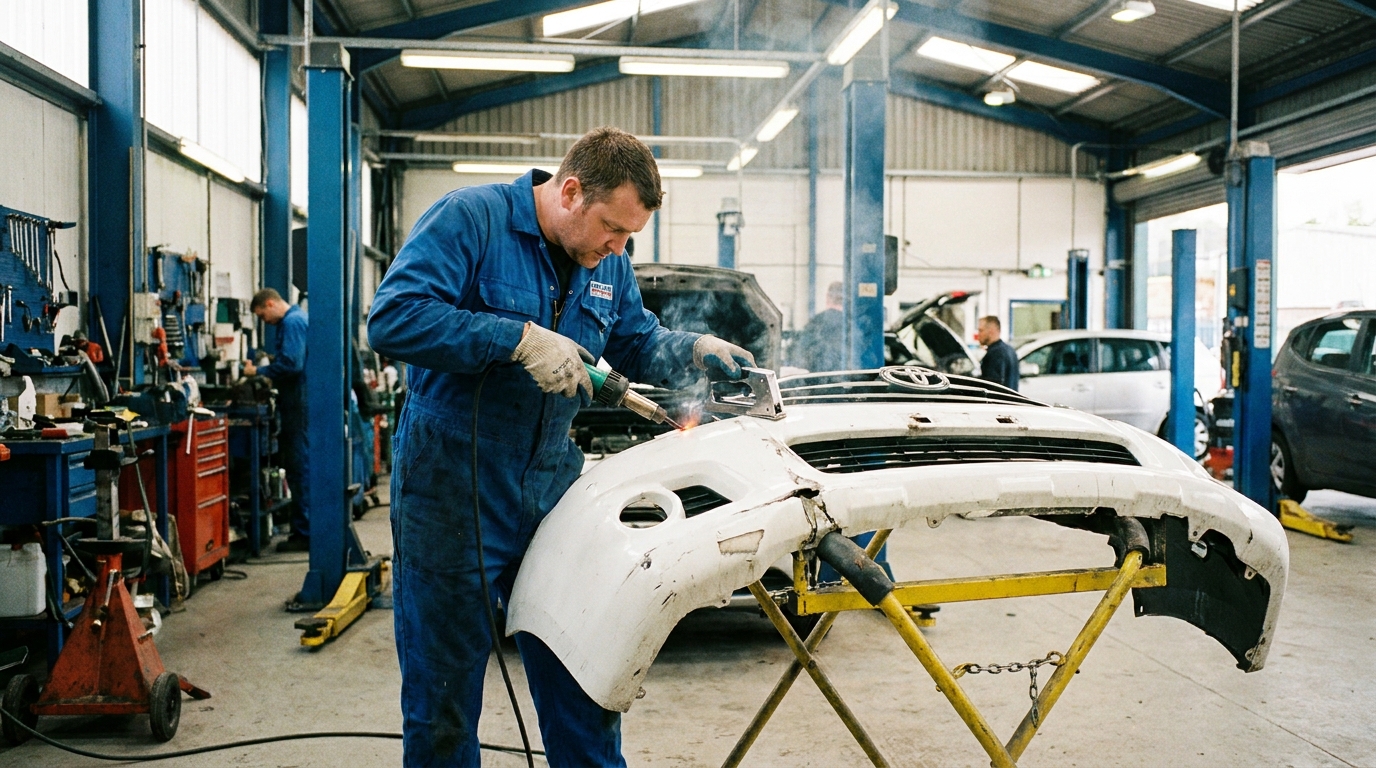
For cracks, splits, and torn sections, plastic welding is the gold standard. A hot air welder (similar in principle to a miniature heat gun) melts a plastic welding rod of matching composition into the crack, fusing the material at a molecular level. The result, when done correctly, is a repair that's as strong as — or stronger than — the original plastic. This technique is used extensively on PP bumpers, which weld beautifully.
Two-Sided Plastic Repair
For deeper cracks or fractures that penetrate the full thickness of the bumper, our technicians repair from both sides. The back of the bumper gets a reinforcing weld bead that locks the crack closed structurally, while the front gets a fine cosmetic weld followed by shaping and painting. This technique is critical for bumpers with support ribs that have snapped — skipping the rear weld leads to the crack reopening.
Chemical Plastic Adhesives and Bumper Repair Kits
For hairline cracks and minor surface damage, high-quality two-part urethane adhesives can be used in conjunction with fibreglass mesh backing tape. These adhesives flex with the bumper, preventing the repair from cracking under normal vehicle vibration. This technique is faster than welding and works well for smaller damage zones.
Tab and Clip Repair
Many bumper cracks originate at mounting points — the plastic tabs and clips that attach the bumper to the vehicle's support frame. When these snap (as often happens in parking incidents), the bumper can sag or develop stress cracks outward from the break point. Repairing or replacing these tabs, rather than replacing the entire bumper, is a common and cost-effective fix.
Heat Reshaping for Scuffs and Dents
Thermoplastic bumpers have a memory — they want to return to their original shape. A skilled technician can use a heat gun to carefully warm a scuffed or dented area, then use a shaping tool or even hand pressure to restore the original contour. For bumpers that have been pushed in without cracking (common in slow-speed impacts), this technique alone — combined with a polish or touch-up paint — can dramatically reduce repair costs.
When to Repair vs When to Replace Your Bumper
Not every damaged bumper can or should be repaired. Here's how we assess the decision at Collision Coachworks:
Repair is usually the right call when:
- The damage is cosmetic — scuffs, scratches, minor dents
- Cracks are clean and can be welded without warping the panel
- The mounting points are intact or repairable
- No sensors, cameras, or radar units are damaged (or they can be reused)
- The overall panel shape is recoverable
Replacement is usually better when:
- The bumper has multiple severe cracks or has shattered
- The impact has compromised the bumper beam or energy absorber behind the fascia
- Integrated sensors (parking sensors, radar, cameras) are destroyed
- The repair cost exceeds 50–60% of a replacement bumper cost
- The vehicle is relatively new and resale value is a consideration
For popular South African vehicles like the VW Polo Vivo, Toyota Hilux, and Ford Ranger, aftermarket replacement bumpers are available from reputable suppliers at reasonable prices. However, for premium vehicles — BMW, Mercedes-Benz, or Audi — OEM bumper pricing can be eye-watering, making a high-quality repair an attractive alternative.
Plastic Bumper Repair Cost in South Africa
One of the most common questions we receive is about plastic bumper repair cost in South Africa. Pricing varies based on damage severity, vehicle type, and whether painting is required. Here's a realistic breakdown as of 2026:
Minor Scuff / Surface Scratch Repair
A single panel area with surface scuffing, no structural damage, and a colour-matched respray: R1,500 – R3,500. This covers prep work, light sanding, fill if needed, and a blend spray. Colour matching technology means the repair is typically invisible once complete.
Single Crack or Split (Welding + Paint)
A clean crack of 10–30cm length, welded front and back, filled, sanded, and resprayed: R2,500 – R5,000. Pricing scales with crack length and how much of the bumper needs to be resprayed to achieve an invisible repair.
Multiple Cracks or Corner Damage
Bumpers with several cracks, broken corners, or tab damage requiring more extensive welding and reshaping: R4,000 – R8,000. At the upper end of this range, replacement may become competitive depending on the vehicle.
Full Bumper Replacement (Supply + Fit + Paint)
Using an aftermarket bumper for a common SA vehicle (VW Polo, Toyota Corolla Quest): R4,500 – R9,000 all-in. For premium vehicles (BMW 3 Series, Mercedes C-Class) using OEM parts: R12,000 – R25,000+.
These prices are estimates for the Cape Town market. The exact cost depends on your specific vehicle, the paint colour (metallics and pearl finishes cost more), and the extent of the damage. At Collision Coachworks we provide detailed written quotes before any work begins.
The Painting Process: Getting the Colour Right
Repairing the plastic is only half the job. Getting the paint right is where the difference between a professional and an amateur repair becomes obvious. At our Parow Industria workshop, we use computerised colour-matching systems that read the existing paint on your vehicle and formulate a precise match — even for faded or aged paintwork.
Bumpers are painted in our climate-controlled spray booth, which maintains temperature and humidity to ensure proper paint adhesion and flow. For bumper repairs, we typically apply:
- A flexible primer (essential on plastic — rigid primer cracks with bumper flex)
- Colour basecoat (matched to your vehicle's OEM colour code)
- Clear lacquer topcoat (2K clearcoat for durability)
The flexible primer and clearcoat are critical on plastic parts. Some cheaper repair shops skip these or use standard body primer on bumpers — this leads to paint cracking and peeling within months. It's one of the first things to check when evaluating the quality of a quote.
Integrated Technology in Modern Bumpers
Modern vehicles — particularly anything manufactured after 2018 — increasingly integrate sensors and cameras directly into the bumper fascia. Parking sensors, radar-based adaptive cruise control, and reversing cameras are all commonly bumper-mounted. This adds complexity to both repair and replacement:
- Parking sensors can usually be reused if the bumper is repaired rather than replaced, provided they weren't directly impacted
- Radar units (used for forward collision warning and automatic emergency braking) are sensitive — if the bumper has been pushed back even slightly, the radar aim may need recalibration after repair
- Front cameras used in lane departure warning systems may need to be removed and refitted around the repair
When quoting for your repair, a reputable panel shop will assess all integrated components. Ignoring these during a bumper repair can leave you with safety systems that no longer function correctly — a serious concern on modern vehicles.
DIY vs Professional Bumper Repair
Hardware stores and online retailers stock bumper repair kits ranging from R200 to R1,500. These can handle very minor scuffs and hairline surface cracks, but they have significant limitations:
- Consumer-grade adhesives don't flex as well as professional two-part urethanes
- Colour matching from aerosol cans is rarely accurate, especially on metallic or pearl paints
- Without proper surface preparation and priming, paint adhesion is poor
- Structural cracks cannot be properly welded with DIY kits
The result is often a repair that's visible, doesn't last, and potentially devalues the vehicle more than the original damage would have. For any damage that's visible from more than a metre away, or involves structural cracking, professional repair delivers far better value.
Drivers across the Northern Suburbs — from Bellville and Goodwood through to Brackenfell, Durbanville, and as far as Blouberg — bring their vehicles to Collision Coachworks because we combine specialist plastic repair skills with professional colour-matching and a quality guarantee on our work.
What to Expect When You Bring Your Car In
The process at Collision Coachworks for a bumper repair is straightforward:
- Assessment — we inspect the bumper, identify the plastic type, assess the damage, and check for any sensor or mounting issues
- Written quote — a detailed quote covering repair vs replacement options where relevant
- Insurance liaison — if you're claiming, we deal directly with your insurer and handle the assessment process
- Repair — plastic welding, reshaping, and filling in our workshop
- Spray booth — flexible primer, colour-matched basecoat, and clearcoat in our climate-controlled booth
- Quality check and handover — we check the repair and paint finish before returning the vehicle
Most bumper repairs are completed within 1–3 days, depending on complexity and whether parts need to be ordered. We'll give you a realistic timeline upfront.
Conclusion
Plastic bumper repair cost in South Africa doesn't have to break the bank, and thanks to modern welding, adhesive, and paint technologies, a professionally repaired bumper can be genuinely indistinguishable from an undamaged one. The key is using a workshop that understands plastic repair as a specialist skill — not just a sanding and spraying exercise.
At Collision Coachworks, located at 9 Assegaai Road, Parow Industria, Cape Town, we handle everything from minor scuff repairs to complex multi-crack welding and colour-matched resprays. We serve drivers across Parow, Bellville, Goodwood, Brackenfell, Durbanville, and the wider Northern Suburbs.
Contact us today for a no-obligation assessment and written quote on your bumper repair. Call us or visit the workshop — we'll give you an honest recommendation on whether repair or replacement is the right call for your vehicle and budget.
Share Article
Need Expert Advice?
Get personalized consultation from our master technicians.
Related Articles
Waterborne vs Solvent Paint: Cape Town Respray Costs and Quality in 2026
Compare waterborne vs solvent paint cars systems used in Cape Town resprays: finish quality, environmental rules, drying times, and typical ZAR costs at a Parow Industria panel beater.
How to Spot a Quality Spray Paint Job: A 10-Point Inspection Checklist
Learn the quality spray paint job signs that separate a professional respray from a rushed job. A practical 10-point checklist Cape Town car owners can use before accepting any panel or respray work.
Automotive Paint Systems Explained: Primer, Basecoat and Clearcoat
A clear breakdown of automotive paint systems explained layer by layer - primer, basecoat and clearcoat - and why each coat matters for a durable, colour-matched repair on Cape Town roads.