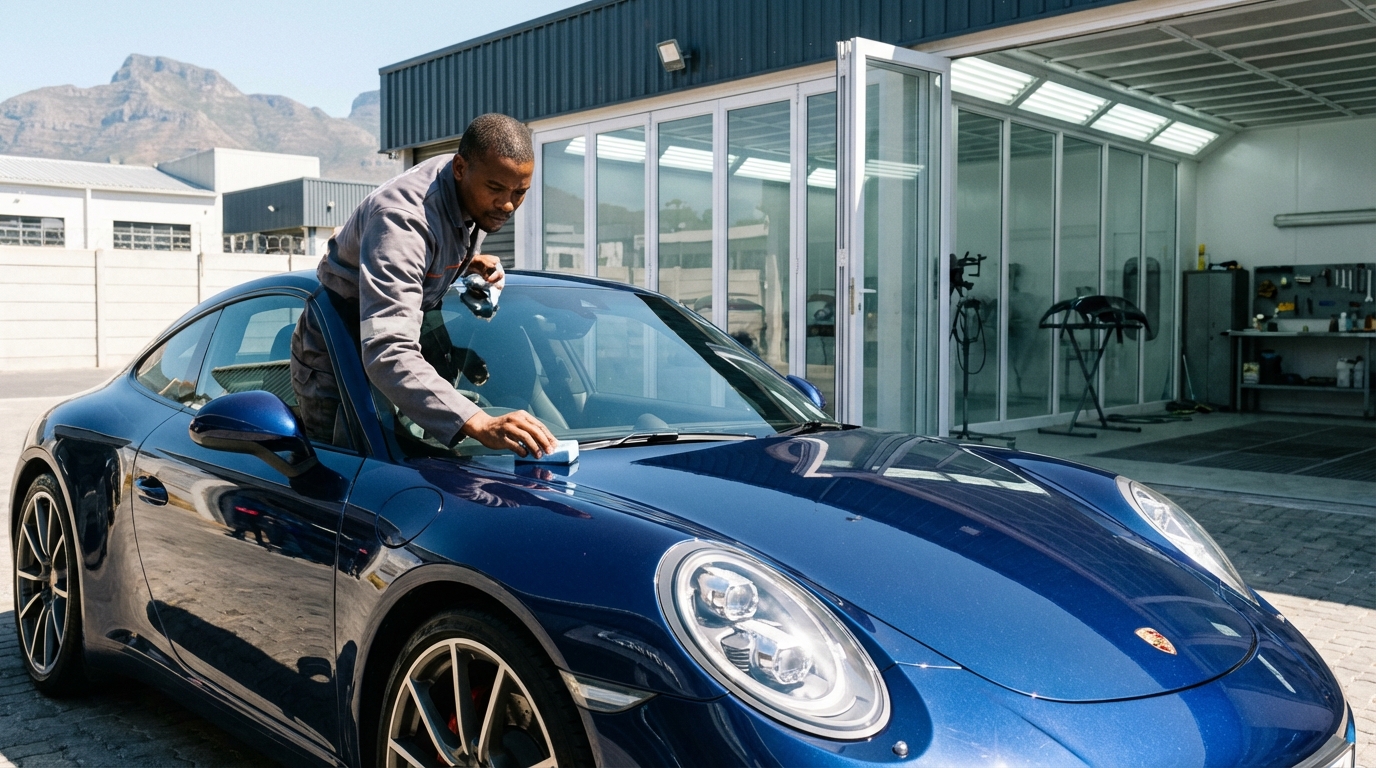
Protecting Your Car's Paint from Sun Damage in Cape Town

Collision Coachworks Team
Expert Panel Beaters
Cape Town is famous for its stunning sunshine, blue skies, and outdoor lifestyle — but that same glorious sun can be one of the biggest threats to your car's paintwork. If you've noticed your vehicle looking a little dull, faded, or chalky despite regular washing, UV damage is likely the culprit. Understanding how to protect your car's paint from sun damage in Cape Town is essential for maintaining your vehicle's value and appearance year-round.
At Collision Coachworks in Parow Industria, we see the effects of sun damage on vehicles every week. Cars brought in for collision repair or respray often show signs of paint oxidation, fading, and clearcoat failure that could have been prevented with the right protection strategy. This guide gives you practical, expert-backed advice to keep your paintwork looking factory-fresh.
How the Cape Town Sun Damages Car Paint
The Western Cape sits at a relatively high latitude with a Mediterranean climate — which means long, hot summers with intense ultraviolet radiation. Unlike European or northern hemisphere cities, Cape Town's UV index regularly hits extreme levels from October through March. This has a direct and measurable impact on automotive paintwork.
UV Oxidation and Clearcoat Breakdown
Modern cars use a two-stage paint system: a coloured base coat topped with a transparent clearcoat. The clearcoat acts as the first line of defence against UV rays, but prolonged exposure causes it to break down at a molecular level. You'll notice this as a dull, chalky or hazy surface — this is called oxidation. Once the clearcoat fails, the base coat underneath becomes vulnerable to fading and discolouration.
Heat-Induced Paint Stress
Cape Town's summer temperatures — particularly in the Northern Suburbs areas like Bellville, Goodwood, Brackenfell, and Durbanville — can see car surfaces reaching 60°C to 80°C in direct sunlight. This thermal expansion and contraction puts stress on paint bonds, particularly around panel edges, shut lines, and previously repaired areas. Over time, micro-cracks develop in the clearcoat, accelerating the deterioration process.
Salt Air Combined with UV
For vehicles driven near the coast — whether along the Atlantic Seaboard, Blouberg, or the West Coast — salt air compounds the problem. Salt particles settle on paint surfaces, and when combined with UV exposure and heat, they create a corrosive environment that attacks both paint and the underlying metal. Panel beaters in Parow Industria like our team at Collision Coachworks regularly see salt-related paint failure on coastal vehicles that weren't properly maintained.
How to Protect Your Car's Paint from Sun Damage
The good news is that sun damage is largely preventable with the right maintenance routine. Here are the most effective strategies, ranked from basic to premium:
1. Park in the Shade Whenever Possible
This sounds obvious, but it's the single most impactful thing you can do. A car parked under a tree, in a garage, or in a shaded parking bay experiences dramatically less UV exposure than one left in direct sun all day. If you park at work outdoors, consider a breathable car cover for added protection. Even reducing daily sun exposure by 50% can significantly extend your paint's lifespan.
2. Wash Your Car Regularly and Correctly
Regular washing removes contaminants — dust, bird droppings, insect residue, and industrial fallout — that can eat into your clearcoat when combined with UV radiation and heat. In Cape Town's environment, a weekly wash is ideal. Use a proper automotive shampoo (not dishwashing liquid, which strips protective wax), a soft microfibre wash mitt, and rinse well.
Avoid washing your car in direct sunlight. The heat causes water and shampoo to dry too quickly, leaving water spots and streaks that can etch into the clearcoat over time. Early mornings or evenings are ideal for washing in Cape Town summers.
3. Apply Wax or Paint Sealant Every 3 to 6 Months
Carnauba wax and synthetic paint sealants both provide a protective layer over your clearcoat that reflects UV rays and repels water. Wax is the traditional option — it gives a warm, deep shine but typically lasts 6 to 10 weeks in harsh conditions. Synthetic sealants last longer (3 to 6 months) and often provide better UV resistance. Either applied correctly is far better than no protection at all.
For Cape Town drivers, we recommend applying a quality paint sealant before the summer season (October) and again mid-season (January). The cost of a good sealant and application is a fraction of what a full respray costs.
4. Consider Ceramic Coating for Long-Term Protection
Ceramic coatings represent the premium end of paint protection. A professionally applied ceramic coating bonds chemically to your clearcoat and provides a hard, hydrophobic layer that offers superior UV resistance, chemical resistance, and ease of cleaning for 2 to 5 years. The upfront cost in South Africa ranges from around R3 500 to R15 000 depending on the product and installer, but for a quality vehicle, it's an excellent investment.
Unlike wax or sealant, ceramic coatings need to be applied by a trained professional to ensure correct preparation and bonding. A poorly applied ceramic coating can actually trap contaminants and cause more harm than good. If you're considering this option for your VW Polo, Toyota Hilux, BMW 3 Series, or Ford Ranger, ask about it when you bring your vehicle in for any bodywork — we can advise on reputable ceramic coating specialists in the Northern Suburbs.
5. Use Paint Protection Film on High-Risk Areas
Paint Protection Film (PPF) — sometimes called a 'clear bra' — is a thick, self-healing urethane film applied to the most vulnerable panels: the bonnet, front bumper, side mirrors, and door leading edges. PPF not only protects against UV but also guards against stone chips, scratches, and road debris. It's particularly valuable for bakkies like the Toyota Hilux or Ford Ranger that spend time on gravel roads.
PPF is more expensive than ceramic coating but provides physical protection that no coating can match. Top-quality PPF from brands like XPEL or 3M can self-heal minor scratches when exposed to heat — a useful feature in Cape Town's sunny climate.
6. Address Paint Chips and Scratches Promptly
Even small stone chips and scratches create entry points for UV radiation to attack the base coat and primer. Left untreated, a tiny chip can spread into significant paint failure and eventually rust, particularly in our salt-air coastal environment. A professional touch-up at a panel beater early on costs very little — waiting until the damage has spread costs significantly more.
If you're in the Parow Industria, Bellville, or Goodwood area and have chips or scratches needing attention, Collision Coachworks can assess whether a touch-up, spot repair, or panel respray is the most cost-effective solution.
Signs Your Car's Paint Already Has Sun Damage
If you're not sure whether your car's paint is already sun-damaged, look out for these warning signs:
- Dull or chalky appearance — the paint looks flat rather than glossy, even after washing.
- Colour fading — the paint is noticeably lighter or patchy, especially on horizontal panels (bonnet, roof) that receive the most sun.
- Peeling or flaking clearcoat — the transparent top layer is visibly separating from the base coat, often starting at panel edges.
- Rough texture — running your hand over a clean panel reveals a sandpaper-like texture caused by embedded contaminants or oxidation.
- Water no longer beads — healthy, protected paint causes water to bead up and roll off. If water sheets flat across the surface, your protective layer is gone.
Can Sun-Damaged Paint Be Restored?
The answer depends on how far the damage has progressed. Mild to moderate oxidation can often be corrected through machine polishing — a paint correction process that removes a thin layer of damaged clearcoat to reveal fresh, undamaged paint beneath. This is a viable option if there's still sufficient clearcoat remaining.
Severe oxidation — where the clearcoat has completely failed and the base coat itself is fading — requires a professional respray to restore. At Collision Coachworks, we use high-quality automotive paint systems in our climate-controlled spray booth to ensure a durable, colour-matched finish. Our colour-matching technology ensures the new paint blends perfectly with any undamaged panels.
The cost of respraying a single panel in Cape Town ranges from approximately R1 500 to R3 500, while a full vehicle respray can range from R15 000 upward depending on vehicle size and paint complexity. This is always significantly more expensive than the preventive maintenance that could have avoided it.
Seasonal Maintenance Calendar for Cape Town Drivers
Given Cape Town's distinct Mediterranean seasons, here's a practical maintenance schedule to protect your paint:
- September–October (Pre-summer): Apply a full paint sealant or have ceramic coating refreshed. Check for any chips or scratches to address before the harsh summer sun arrives.
- December–January (Peak summer): Increase washing frequency. Avoid parking in direct sun where possible. Re-apply wax or sealant if needed.
- March–April (Post-summer): Wash thoroughly to remove summer contaminants. Inspect paint carefully for any new damage. Schedule any repair work before winter rains arrive.
- June–August (Winter): While UV is less intense, rain and road spray bring new contaminants. Maintain regular washing and ensure wax protection is intact going into the wet season.
Protect Your Investment
Your car's paintwork is more than just aesthetics — it's a primary barrier protecting the steel panels beneath from corrosion, and it's a major factor in your vehicle's resale value. A well-maintained paint finish on a VW Polo or Toyota Hilux can add thousands of rands to its trade-in value compared to a faded, oxidised equivalent.
The strategies above are genuinely effective at preventing sun damage in Cape Town's climate. The cost of wax, sealant, and careful parking is negligible compared to the cost of a full respray — and the results speak for themselves. Vehicles that are well-protected simply hold their value and look better for longer.
If your car's paint is already showing signs of sun damage, or if you'd like a professional assessment before committing to protection products, the team at Collision Coachworks at 9 Assegaai Road, Parow Industria is here to help. We provide expert paint assessments, professional repair and respray services, and honest advice on the most cost-effective solutions for your vehicle. Contact us today to book an assessment and keep your vehicle looking its best — whatever Cape Town's sun throws at it.
Share Article
Need Expert Advice?
Get personalized consultation from our master technicians.
Related Articles
Electric Vehicle Body Repair: New Challenges for Panel Beaters (2026 Update)
Electric vehicle body repair panel beating brings high-voltage safety, aluminium structures, and specialised adhesives that traditional workshops must master. Here is what Cape Town EV owners should know in 2026.
How Long Does Panel Beating Take? Repair Timeline Guide
Find out how long panel beating takes in Cape Town, from minor dents to major collision repair, with realistic timelines, process stages, and local factors that affect turnaround.
Third-Party vs Comprehensive Insurance for Panel Beating: A Cape Town Driver's 2026 Guide
Third-party or comprehensive cover? We break down exactly what each policy pays for when your car needs panel beating, using real Cape Town repair scenarios and 2026 ZAR figures.