Third-Party vs Comprehensive Insurance: What Covers Panel Beating?

Collision Coachworks Team
Expert Panel Beaters
One of the most common questions panel beaters in Cape Town hear after a collision is: "Will my insurance cover this?" The answer depends entirely on what type of car insurance you hold — third-party or comprehensive. Understanding the difference between these two policy types is critical for every South African driver, especially when it comes to panel beating costs after an accident.
At Collision Coachworks in Parow Industria, we work with insurance-backed repairs on a daily basis. We've seen firsthand how confusion over policy types can leave drivers with unexpected out-of-pocket expenses. This guide will clarify exactly what each policy covers, and what that means for your panel beating and spray painting repairs.
What Is Third-Party Car Insurance in South Africa?
Third-party insurance is the most basic — and most affordable — form of vehicle insurance available in South Africa. As the name implies, it covers third parties — meaning other people, their vehicles, and their property — in the event that you are at fault in an accident.
Here is what third-party insurance does cover:
- Damage to another person's vehicle if you caused the accident
- Damage to third-party property (fences, walls, storefronts)
- Third-party bodily injury claims (depending on the policy)
Here is what third-party insurance does not cover:
- Damage to your own vehicle
- Panel beating or spray painting on your car
- Theft or hijacking of your vehicle
- Fire damage to your car
- Windscreen or glass replacement
This is a crucial distinction. If you are involved in a fender bender in Bellville and the accident was your fault — or even if it was a hit-and-run — a third-party policy will not pay a cent toward repairing your own vehicle. You will need to fund those panel beating costs yourself.
Third-Party, Fire and Theft — A Middle Ground
Many South African insurers offer a hybrid option called third-party, fire and theft. This extends your basic third-party cover to include protection if your vehicle is stolen or catches fire. However, it still does not cover collision damage to your own car. So if a minibus taxi clips your Toyota Hilux on the N1 near Goodwood, you would still be paying for the repairs out of pocket unless the taxi driver's insurer accepts liability.
What Is Comprehensive Car Insurance?
Comprehensive insurance is the gold standard of vehicle cover in South Africa. It includes everything in a third-party policy, but also covers damage to your own vehicle — regardless of who was at fault in the accident.
With comprehensive cover, the following are typically included:
- Panel beating and structural repairs after a collision
- Spray painting and colour matching to pre-accident condition
- Windscreen and glass replacement
- Theft and hijacking
- Fire damage
- Hail damage (subject to policy terms)
- Flood damage in some cases
- Third-party liability
For most drivers in Cape Town, comprehensive insurance means that after a collision, they bring their vehicle to a registered panel beater like Collision Coachworks, and the insurer handles the cost — minus the excess amount.
Understanding Your Excess
Even with comprehensive cover, you are not off the hook entirely. Your policy will include an excess — the amount you must pay before your insurer covers the rest. In South Africa, vehicle excesses can range from R1,500 to R10,000 or more, depending on your policy, your age, your vehicle value, and whether you chose a higher voluntary excess to reduce your monthly premium.
For example, if you bring your VW Polo in for panel beating repairs that cost R18,000, and your excess is R3,500, you pay R3,500 and your insurer pays R14,500. The panel beater invoices the insurer directly after the assessment is approved.
Which Policy Covers Panel Beating Repairs?
To answer this clearly: only comprehensive insurance covers panel beating on your own vehicle. Third-party policies do not.
There is one important exception: if another driver causes the accident and they hold a comprehensive policy, their insurer may pay for your repairs under the third-party liability portion of their cover. But pursuing this route requires that the other driver accepts liability, their insurer agrees, and the process can take time — sometimes weeks or months — while your vehicle sits off the road.
At Collision Coachworks, we often assist clients who are waiting on third-party liability settlements. We can provide accurate repair quotations to support your claim and work with the other driver's insurer directly where possible.
Dealing with Insurance Assessors: What Happens After You Claim
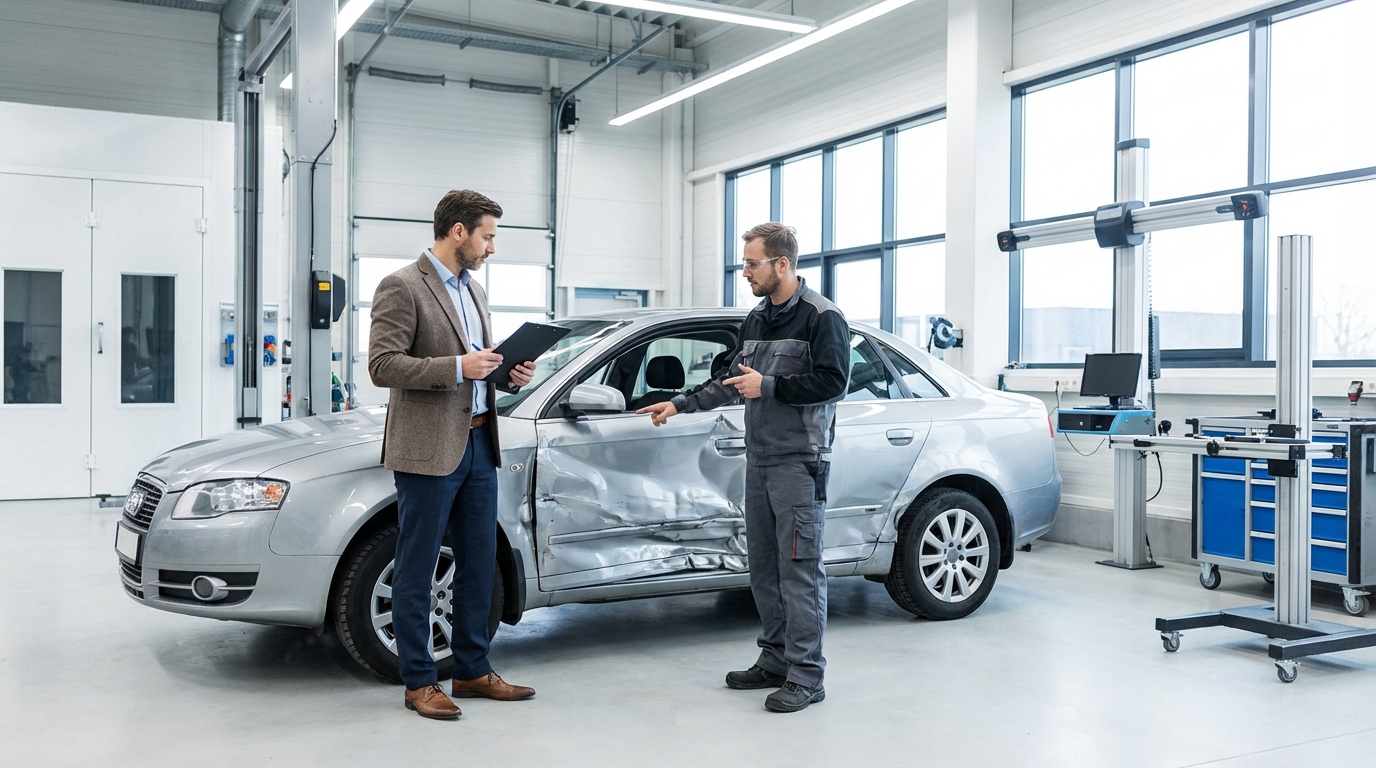
Once you submit a comprehensive insurance claim after a collision, your insurer will typically send an assessor — also called a loss adjuster — to inspect the vehicle and authorise the repairs. This assessment determines which repairs are approved and sets the maximum labour and parts costs your insurer will cover.
This is where choosing a reputable, insurance-approved panel beater matters enormously. At Collision Coachworks, our assessments are thorough and our quotations are detailed. We work within insurer guidelines while ensuring every genuine repair is documented and included.
Some important points to know during the assessment process:
- You have the right to choose your own panel beater in most cases — your insurer cannot force you to use a specific workshop unless your policy specifies otherwise
- If you disagree with the assessment outcome, you can request a re-assessment or appoint an independent assessor
- Pre-existing damage (scratches or dents unrelated to the current accident) will not be covered by the new claim
- OEM (Original Equipment Manufacturer) parts vs aftermarket parts may be specified in your policy — it's worth knowing what your insurer will pay for
Common Scenarios: What Gets Covered and What Doesn't
Scenario 1: You Rear-End Another Car (Your Fault)
If you hold third-party insurance, the other driver's vehicle repairs are covered by your policy, but your own vehicle is not. You will pay for your front-end panel beating repairs yourself — which can easily run R15,000 to R40,000 or more for a VW Polo or Ford Ranger. With comprehensive cover, both vehicles are covered (yours under your policy, theirs under the third-party portion).
Scenario 2: Another Driver Hits You (Not Your Fault)
If the other driver is insured and accepts liability, their comprehensive policy's third-party liability section covers your repairs. If they are uninsured or deny liability, and you only have third-party cover, you have very limited recourse. South Africa does not have a government-funded vehicle damage compensation scheme (only the Road Accident Fund for personal injury). With comprehensive cover, you claim from your own insurer regardless of who is at fault.
Scenario 3: Hail Damage in a Storm
Cape Town experiences severe hailstorms from time to time, and hail damage repair is a common service at panel beating shops in Parow Industria and the Northern Suburbs. Hail damage is generally covered under comprehensive insurance — but check your policy, as some list it as an exclusion or require a specific endorsement. Third-party insurance covers nothing here.
Scenario 4: Pothole Damage
Pothole damage is increasingly common on Cape Town's deteriorating road infrastructure. Suspension and tyre damage from potholes is sometimes covered under comprehensive policies, though this varies significantly between insurers. Body damage caused by a severe pothole impact (bent rims, cracked bumpers, undercarriage damage) may qualify for a claim — but you will likely pay an excess. Third-party cover: nothing.
Should You Upgrade to Comprehensive Insurance?
The cost difference between third-party and comprehensive insurance can feel significant — especially for newer, higher-value vehicles. But the risk of carrying only third-party cover on a vehicle you depend on daily is substantial.
Consider the following when evaluating your policy:
- Vehicle age and value: Comprehensive cover makes the most financial sense for vehicles worth more than R100,000. For older, fully depreciated cars, some drivers opt for third-party and self-fund minor repairs.
- Replacement cost: Could you afford to replace your car outright if it were written off? If not, comprehensive cover is worth it.
- Driving environment: If you drive regularly in high-traffic areas around Brackenfell, Durbanville, or through Cape Town's CBD, your exposure to collision risk is higher.
- Voluntary excess: You can reduce your monthly premium by accepting a higher voluntary excess. This works well if you are a careful driver with a clean record.
Finding the Right Panel Beater for Insurance Work
Whether you're claiming from your own comprehensive policy or pursuing a third-party liability claim, the quality of your panel beater's work and documentation directly affects your outcome. Insurers work closely with workshops that are professional, transparent, and produce detailed repair quotations.
At Collision Coachworks, located at 9 Assegaai Road, Parow Industria, we offer:
- Detailed, itemised quotations that meet insurer requirements
- Liaising with assessors on your behalf to ensure all damage is captured
- Factory-matched spray painting and finishing that meets manufacturer standards
- Structural assessments and chassis straightening where required
- Insurance-approved repair methodologies
We serve clients from Bellville, Goodwood, Milnerton, Ravensmead, and across the Cape Town Northern Suburbs. Whether your vehicle is a VW Polo, a BMW 3 Series, a Toyota Hilux, or a Ford Ranger, our team brings the same level of care and technical expertise to every repair.
Conclusion: Know Your Cover Before You Need It
The bottom line is clear: if you want your insurer to pay for panel beating repairs on your own vehicle, you need comprehensive insurance. Third-party cover protects others from your mistakes, not your vehicle from damage.
Review your policy carefully before you find yourself at the side of the road after a collision. Understand your excess, know whether your insurer specifies approved repairers, and make sure you have the documentation you need to claim efficiently.
When the time comes, Collision Coachworks is here to help you navigate the claims process and restore your vehicle to pre-accident condition. Contact us at 9 Assegaai Road, Parow Industria, or reach us by phone to discuss your repair needs and insurance situation. We are here to make a stressful experience as smooth as possible.
Share Article
Need Expert Advice?
Get personalized consultation from our master technicians.
Related Articles
Electric Vehicle Body Repair: New Challenges for Panel Beaters (2026 Update)
Electric vehicle body repair panel beating brings high-voltage safety, aluminium structures, and specialised adhesives that traditional workshops must master. Here is what Cape Town EV owners should know in 2026.
How Long Does Panel Beating Take? Repair Timeline Guide
Find out how long panel beating takes in Cape Town, from minor dents to major collision repair, with realistic timelines, process stages, and local factors that affect turnaround.
Third-Party vs Comprehensive Insurance for Panel Beating: A Cape Town Driver's 2026 Guide
Third-party or comprehensive cover? We break down exactly what each policy pays for when your car needs panel beating, using real Cape Town repair scenarios and 2026 ZAR figures.