The Science Behind Automotive Paint Systems

Collision Coachworks Team
Expert Panel Beaters
Automotive Paint Systems Explained: More Than Meets the Eye
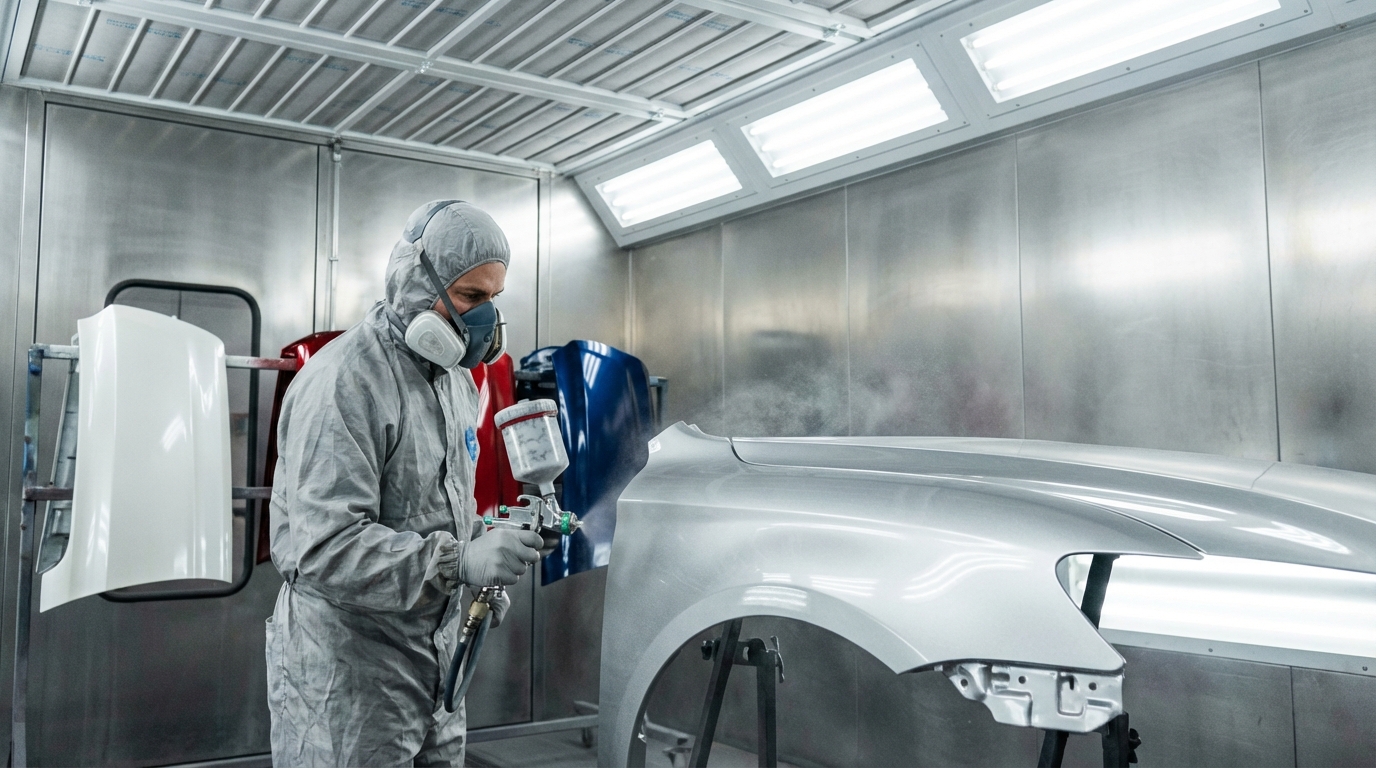
When you look at a freshly painted car gleaming under the Cape Town sun, you are seeing the result of decades of chemical engineering and materials science. Modern automotive paint systems are far more sophisticated than most drivers realise. Each vehicle rolling out of a professional spray booth carries multiple carefully formulated layers, each serving a distinct purpose in protecting the metal beneath and delivering that showroom-quality finish.
At Collision Coachworks in Parow Industria, we work with these paint systems every day, restoring collision-damaged vehicles to their original glory. Understanding what goes into automotive coatings helps you appreciate why professional spray painting is an investment in your vehicle's longevity and why cutting corners on paint quality is never worth it.
The Four-Layer Paint System: Building Protection from the Ground Up
A modern automotive paint system consists of four primary layers, each bonded to the next through careful chemical and mechanical adhesion. Think of it as building a house: skip the foundation, and everything above it eventually fails.
1. E-Coat (Electrodeposition Primer)
The first layer applied to bare metal is the electrodeposition coat, commonly known as e-coat. During manufacturing, the entire vehicle body is submerged in a tank of electrically charged paint particles. An electrical current causes the paint to deposit evenly across every surface, including hard-to-reach cavities and box sections that a spray gun could never access.
E-coat serves as the primary corrosion barrier. In a country like South Africa, where coastal humidity in Cape Town and salt air from the Atlantic and False Bay can accelerate rust formation, this layer is critical. When a panel beater replaces or repairs panels after a collision, replicating this level of corrosion protection requires specialised epoxy primers and careful surface preparation.
2. Primer Surfacer
Above the e-coat sits the primer surfacer. This thicker layer has two jobs: it fills minor surface imperfections like sanding scratches and small dents, and it provides a uniform surface for the colour coat to adhere to. High-quality primer surfacers contain corrosion inhibitors and UV-stabilising additives that extend the life of the entire paint system.
In collision repair, the primer surfacer stage is where craftsmanship truly matters. At our workshop on Assegaai Road, we use premium two-component (2K) primer surfacers that cure through a chemical reaction rather than simple solvent evaporation. This produces a harder, more durable foundation that resists chipping from stone impacts — a real concern on Cape Town roads, especially the N1 and N7 highways where loose gravel is common.
3. Basecoat (Colour Coat)
The basecoat is what gives your car its colour and visual character. Modern basecoats are incredibly complex formulations containing pigments, metallic flakes, pearl particles, or a combination of all three. A single colour might require dozens of different pigments blended in precise ratios to achieve the correct hue.
This is where colour matching technology becomes essential. When repairing a single panel on your VW Polo or Toyota Hilux, the new paint must seamlessly blend with the original finish on adjacent panels. Modern spectrophotometers measure the existing paint and generate a formula, but even then, an experienced spray painter must adjust for factors like spray distance, air pressure, and the number of coats applied.
4. Clear Coat
The final layer is the clear coat, a transparent protective film that sits over the basecoat. Clear coat is responsible for the gloss and depth you see in a quality paint finish, but it also serves as the primary shield against UV radiation, bird droppings, tree sap, industrial fallout, and mechanical abrasion from washing and general use.
Premium clear coats used in professional collision repair contain ceramic nano-particles and UV absorbers that significantly outperform budget alternatives. The difference becomes apparent within 12 to 18 months: a quality clear coat maintains its gloss and resists yellowing, while a cheap alternative begins to fade, peel, or develop a chalky appearance — particularly under the intense Western Cape sun.
Waterborne vs Solvent-Based Paints: The Industry Shift
One of the biggest changes in automotive paint systems over the past decade has been the transition from solvent-based to waterborne basecoats. Traditional solvent-based paints use chemical solvents like toluene and xylene to keep pigments in suspension, but these volatile organic compounds (VOCs) contribute to air pollution and pose health risks to spray painters.
Waterborne paints replace most of these solvents with water, reducing VOC emissions by up to 80 percent. Despite initial scepticism in the industry, waterborne basecoats now match or exceed solvent-based paints in colour accuracy, metallic orientation, and overall finish quality. Most vehicle manufacturers have switched to waterborne systems in their factories, meaning that using waterborne paint in collision repair actually provides a closer match to the original finish.
At Collision Coachworks, we have invested in waterborne paint systems and the climate-controlled spray booths required to use them effectively. Waterborne paints are more sensitive to temperature and humidity during application, which is why proper booth conditions are non-negotiable for a flawless result. Shops that spray in open bays or poorly ventilated areas cannot achieve consistent results with waterborne technology.
Why Surface Preparation Is 80 Percent of the Job
Ask any experienced panel beater what determines the quality of a paint job, and they will tell you it is the preparation. Surface preparation accounts for the vast majority of labour time in a professional respray, and for good reason. Paint does not hide imperfections — it amplifies them.
The preparation process typically involves several stages. First, damaged panels are repaired through welding, filling, and shaping. Body filler is applied in thin layers and block-sanded to achieve a smooth contour that matches the original panel shape. This is followed by multiple grades of sanding, starting with coarse 80-grit paper and progressing through 180, 320, and finally 500-grit to create the ideal surface texture for primer adhesion.
Each sanding stage removes the scratches left by the previous grit while creating a finer scratch pattern. Skip a grit, and you risk those deeper scratches telegraphing through the primer and paint, becoming visible as the finish settles over the following days. This is a common shortcut taken by budget panel beaters that becomes painfully obvious once you park your car in direct sunlight.
The Role of Paint Thickness in Durability
Total paint thickness on a factory-finished vehicle typically ranges from 100 to 150 microns — roughly the thickness of a human hair. Within this incredibly thin film, each layer must fall within a specific thickness range to perform correctly.
Too little primer means inadequate corrosion protection and poor surface levelling. Too much primer creates a brittle layer prone to cracking under impact. Basecoat thickness affects colour density and metallic flake orientation, while clear coat thickness determines UV protection and scratch resistance.
Professional spray painters use electronic paint thickness gauges to verify their work. During collision repair, it is important that the repaired area matches the surrounding panels in thickness. Excessive paint buildup — a telltale sign of multiple resprays or poor technique — can cause adhesion failures, orange peel texture, and cracking over time. When buying a used car in Cape Town, running a paint thickness gauge over the body is one of the best ways to identify previous accident damage and assess repair quality.
Colour Matching Challenges in South African Conditions
South Africa presents unique challenges for automotive colour matching. The intense UV radiation at our latitude causes paint to fade faster than in northern hemisphere countries, meaning a three-year-old car in Cape Town may have noticeably different paint compared to the same model stored in a garage in London.
Common vehicles on South African roads like the VW Polo, Ford Ranger, BMW 3 Series, and Toyota Hilux each have their own colour matching quirks. Metallic silvers and pearl whites are particularly challenging because the metallic flakes must be oriented at the correct angle during spraying to match the factory finish. The angle at which paint is sprayed, the distance from the panel, and even the speed of the spray gun pass all affect how metallic particles lay within the basecoat film.
This is why we invest in advanced spectrophotometer technology at our Parow Industria workshop. The device reads the existing paint at multiple angles, accounting for the way light interacts with metallic and pearl particles, and generates a precise mixing formula. Combined with our painters' experience, this technology allows us to achieve invisible repairs that blend seamlessly with the surrounding panels.
Special Finishes: Matte, Satin, and Ceramic Coatings
The automotive paint landscape has expanded significantly in recent years. Matte and satin finishes, once reserved for concept cars, are now available on production models from BMW, Mercedes-Benz, and Hyundai. These finishes use a clear coat with a controlled level of micro-roughness that scatters light instead of reflecting it sharply.
Repairing matte and satin finishes requires specialised products and techniques. Standard polishing, which is used to remove imperfections from gloss clear coats, will create shiny spots on a matte finish that are impossible to reverse without respraying. Panel beaters working on these finishes must use dedicated matte clear coats and avoid any buffing or polishing of the final surface.
Ceramic coatings, while not part of the paint system itself, have become a popular aftermarket addition. These nano-ceramic layers bond to the clear coat surface, providing enhanced hydrophobic properties, chemical resistance, and scratch protection. Applying a ceramic coating after a professional respray can extend the life of the paint system significantly, especially for vehicles regularly exposed to Cape Town's coastal conditions.
What Happens When Paint Systems Fail
Understanding paint failure helps you recognise problems early and seek professional repair before they worsen. The most common paint failures include peeling, where the clear coat or basecoat loses adhesion and lifts away from the layer beneath. This is typically caused by contamination during application, insufficient surface preparation, or incompatible products.
Oxidation occurs when UV radiation breaks down the clear coat, allowing oxygen to attack the basecoat pigments. This manifests as a chalky, faded appearance and is particularly common on horizontal surfaces like bonnets and roofs that receive the most direct sunlight. Red and black colours are especially susceptible to UV damage in South African conditions.
Orange peel texture, characterised by a bumpy surface resembling the skin of an orange, results from incorrect spray gun settings, paint viscosity, or booth temperature during application. While mild orange peel can be corrected through careful wet sanding and polishing, severe cases require a complete respray of the affected panel.
Why Professional Collision Repair Matters for Your Paint
Every layer in a modern automotive paint system depends on the layers below it for adhesion and performance. When a collision damages your vehicle, the repair process must rebuild this layered system correctly to restore both appearance and protection. Skipping steps, using incompatible products, or rushing the curing process leads to premature paint failure that costs more to correct than doing it properly the first time.
At Collision Coachworks, located at 9 Assegaai Road in Parow Industria, we understand the science behind every layer of paint we apply. Our climate-controlled spray booths, premium paint materials from leading manufacturers, and experienced team of spray painters ensure that every repair meets the highest standards. Whether you are restoring a single scratched panel or repainting an entire vehicle, the quality of the paint system determines how your car will look and how well it will resist the Cape Town elements for years to come.
If your vehicle needs paint repair or you have questions about the best approach for your specific car, contact our team for a professional assessment. We serve the Northern Suburbs including Bellville, Goodwood, Brackenfell, and Durbanville, and we are happy to explain exactly what your vehicle needs before any work begins.
Share Article
Need Expert Advice?
Get personalized consultation from our master technicians.
Related Articles
Electric Vehicle Body Repair: New Challenges for Panel Beaters (2026 Update)
Electric vehicle body repair panel beating brings high-voltage safety, aluminium structures, and specialised adhesives that traditional workshops must master. Here is what Cape Town EV owners should know in 2026.
How PDR Technology Works: Modern Paintless Dent Repair Explained
Paintless dent repair technology removes dents without touching your car's original paint. Here's how PDR works, when it beats traditional panel beating, and what Cape Town drivers can expect.
Waterborne vs Solvent Paint: Cape Town Respray Costs and Quality in 2026
Compare waterborne vs solvent paint cars systems used in Cape Town resprays: finish quality, environmental rules, drying times, and typical ZAR costs at a Parow Industria panel beater.